
Define the session before choosing the services
Start with a one-page description of the actual multiplayer experience: players per session, session length, competitive or cooperative rules, invited parties, public matchmaking, late joining, and supported platforms. These choices belong in the production brief because each creates a different failure case. A private four-player room and a ranked public queue may share gameplay code while requiring very different invitation, identity and recovery behavior.
Decide whether the launch build needs a listen server, a dedicated server, or another deliberately scoped architecture. Unreal distinguishes clients from the server that holds authoritative game state, and Epic recommends planning networking at the beginning of gameplay development. Our recommendation is to test one complete player journey before expanding the content: create a group, connect, finish a round, record the outcome and return safely to the menu. [1]
- Write down what happens when the host or party leader leaves.
- Define whether a disconnected player can return, and for how long.
- Separate launch requirements from later features such as ranked seasons or cross-platform parties.
Give each gameplay system a replication contract
For every shared system, identify its authoritative owner, the information clients need, and the events they may request. Consider a collectible: the server decides whether it can be awarded; clients need the resulting inventory state and feedback. A visual sparkle does not need the same network treatment as a reward. Keeping these responsibilities explicit makes reviews more useful than simply counting replicated variables. [1]
Agree what must survive late joining and what can be reconstructed locally. In VR, also distinguish gameplay-relevant hand or held-object state from cosmetic avatar movement. Our planning recommendation is to review these categories separately; sending every visual detail at the same rate creates a bandwidth commitment before anyone has measured its value.
Epic documents that bandwidth limits can prevent every actor from replicating in a network update and that actor priorities are relative. Raising every priority does not solve saturation. Budget network traffic around what players must perceive reliably, then test under constrained connections with the actual action density expected in a round. A calm empty map provides little evidence about the busiest encounter. [2]
Separate the lobby, the backend and the running match
A lobby is the player's grouping and readiness experience. A game session is the running match. A backend coordinates trusted service requests and may handle identity, progression or other persistence. Treat these as separate responsibilities even when the first implementation is small. AWS describes a hosting solution in terms of game clients, backend services, game server software, placement and fleets. It recommends a backend to communicate with GameLift Servers rather than placing sensitive AWS credentials in the client. [3]
Describe the lifecycle in plain language before implementation: invited, joined, ready, placement requested, server ready, connected, completed. Each transition needs a timeout, a player-facing explanation and an owner in the team. A spinner that never resolves is a production defect even if the server itself is healthy.
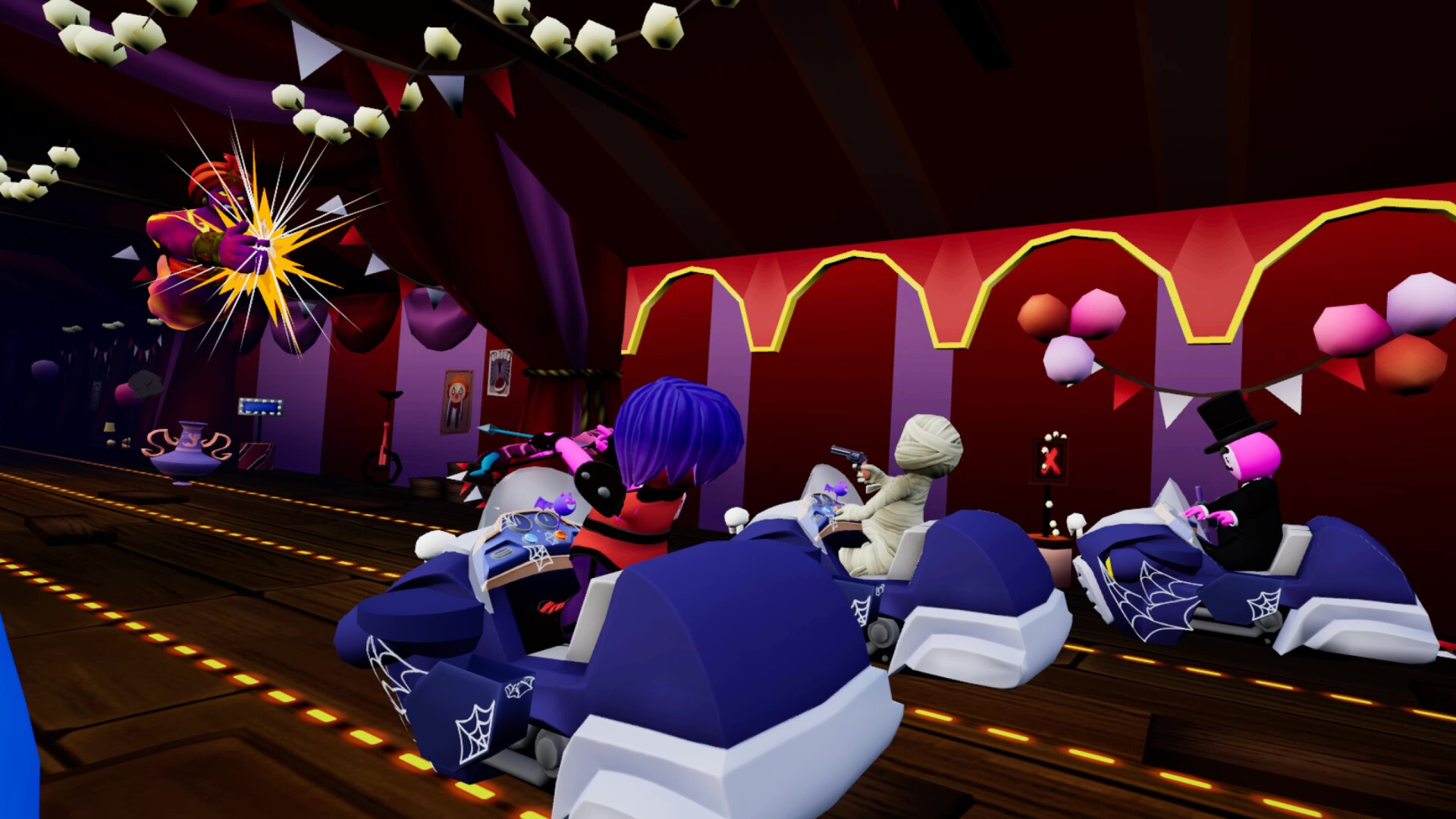
For ByOwls, Rival Rides provides a concrete shipped multiplayer VR reference: its published case covers replication, avatars and inverse kinematics, alongside AWS GameLift, Lambda and DynamoDB work. That evidence demonstrates the scope involved; it does not mean another project's backend should copy the same services or that a hosting cost can be predicted without its workload.
Matchmaking and server placement answer different questions
Matchmaking decides which players should share a session. Placement decides where that session will run. FlexMatch evaluates player attributes and game rules to form matches; GameLift Servers queues handle finding hosting capacity. Planning these separately prevents a common ambiguity in briefs: 'fast matchmaking' might mean insufficient compatible players, slow server startup, or a failed connection after a placement has already succeeded. Each needs a different response. [4]
GameLift Servers queues can consider player latency, fleet capacity and placement preferences across fleets and locations. Choose launch regions from the audience you expect to serve and measure client latency rather than promising worldwide performance from a map. Define what happens when preferred capacity is unavailable: acceptable alternatives, maximum waiting time and a clear failure state. Those are product decisions supported by the placement system, not decisions the infrastructure should silently make for you. [5]
Include operations in the release scope
Write an operational acceptance plan alongside gameplay acceptance. It should name the person who receives an alert, the information needed to diagnose a failure and the procedure for restoring a compatible build. Decide how client and server versions are matched, how active sessions are handled during updates and how a rollback is rehearsed. These recommendations are a release checklist, not a guarantee supplied by any hosting provider.
GameLift Servers exposes fleet, queue, player-session and matchmaking metrics through its console and CloudWatch. Use those measurements to observe capacity and placement behavior, then add game-specific evidence such as a failed transition or an unexpected round termination. Infrastructure health alone cannot confirm that players completed the journey. Agree alert thresholds after measuring a representative build instead of copying an arbitrary percentage from another game. [6]
A useful launch rehearsal includes deliberate disconnects, cancelled requests, full sessions and an unavailable region. Record the result as a reproducible issue with build version, region and sequence of actions. Avoid logging secrets or unnecessary personal information while collecting evidence.
Make the first milestone an end-to-end playable journey
Our preferred planning milestone is a narrow multiplayer slice with representative gameplay, packaged clients, a real backend path and a visible recovery flow. It creates a shared basis for estimating the remaining modes, content and operational work. A screen recording should show the player journey; a separate test note should state devices, connection conditions and known limitations.
Ask a development partner to separate gameplay implementation, backend integration, platform account work, deployment and continuing operations in the estimate. That separation makes ownership and ongoing costs understandable. A studio can then expand a proven session rather than discovering at the end that a polished local experience still lacks the systems needed to run as a service.
Official sources
Technical statements link to official documentation. Planning and acceptance recommendations are ByOwls editorial guidance.
Technical sources reviewed .
- Networking Overview — Epic Games
- Actor Priority — Epic Games
- How hosting with Amazon GameLift Servers works — Amazon Web Services
- Add FlexMatch matchmaking to Amazon GameLift Servers — Amazon Web Services
- Configure game session placement — Amazon Web Services
- Monitor Amazon GameLift Servers with Amazon CloudWatch — Amazon Web Services