
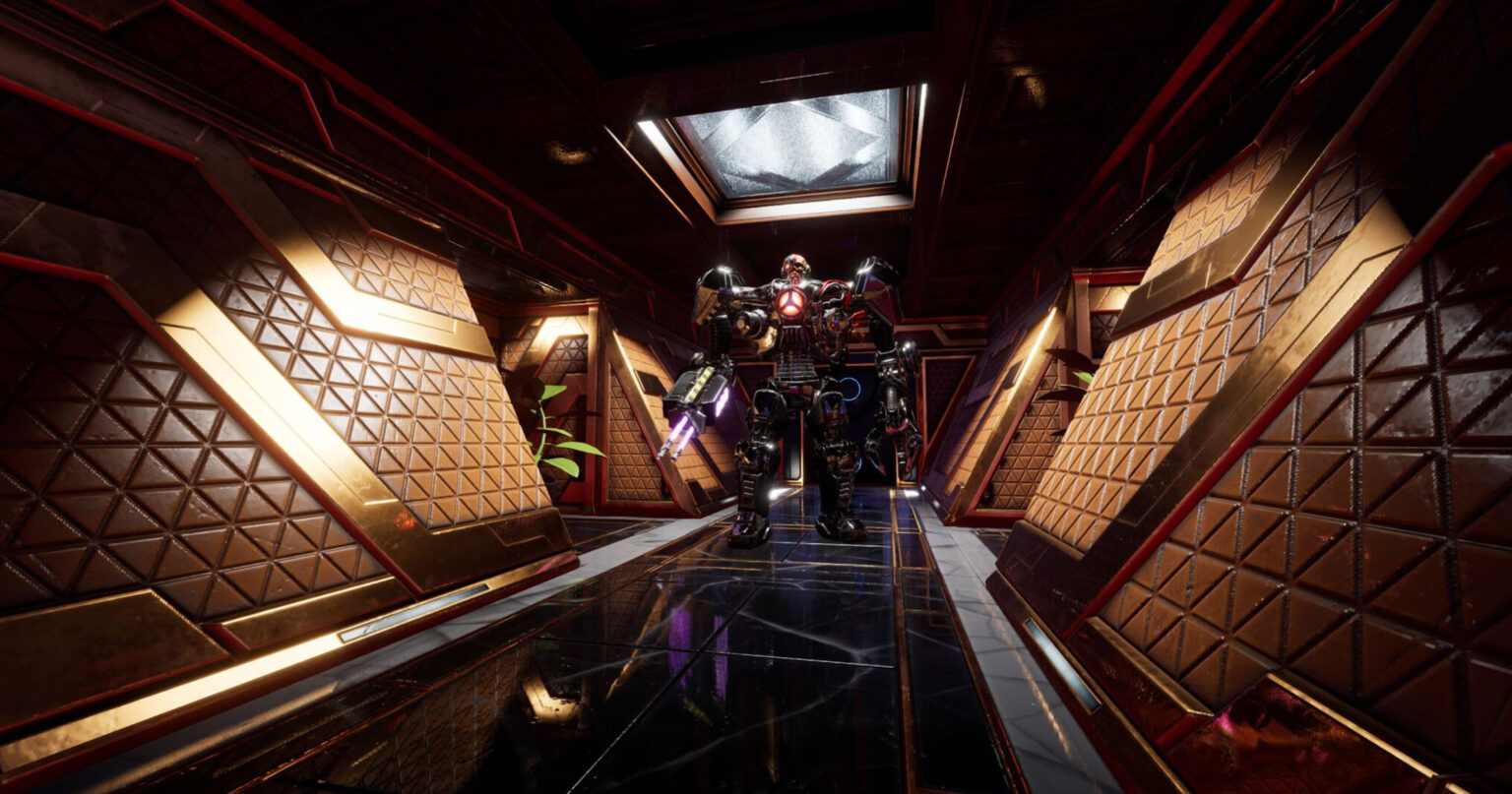
System Shock stands out as an exceptional video game remake that manages to be even more eccentric and intricate than its source material, exceeding my expectations in terms of enjoyment. This game faithfully replicates the groundbreaking first-person shooter from the ’90s created by Looking Glass Studios, while introducing a visually striking style and incorporating new gameplay elements. It presents a complex and occasionally challenging experience that cannot fully replace its predecessor but offers a delightful sense of familiarity.
The narrative of System Shock unfolds in a retro-futuristic setting, where the year 2072 resembles the aesthetics of 1994. The majority of the game takes place on Citadel, a foreboding space station controlled by the nefarious megacorporation TriOptimum. A manipulative TriOptimum executive coerces a skilled hacker into disabling the “don’t be evil” safeguard of Citadel’s AI, known as SHODAN. To our surprise, and perhaps to my support, SHODAN proclaims herself as a deity. She concocts a convoluted web of schemes aimed at annihilating humanity, which range from space-based lasers to grotesque viruses. As the hacker, your mission is to thwart each of her malevolent plans and ultimately bring about her downfall.
Developer: Nightdive Studios
Publisher: Prime Matter
Release: May 30, 2023
On: Windows
From: Steam, GOG, Humble, Epic Games
Price: £35/$40/€40
System Shock embraces the essence of both a reboot and a remake, staying true to the original’s core while introducing fresh elements to keep seasoned players engaged. As an unidentified hacker, you find yourself forcefully recruited by a dubious executive and transported to Citadel Station, a corporate sanctuary orbiting Jupiter. Tempting you with the promise of freedom and an intriguing neural implant, he seeks your assistance in bypassing the ethical safeguards of the station’s managerial artificial intelligence, known as SHODAN.
Undoubtedly, Citadel embodies a labyrinth of tight and uncomfortably narrow passageways, nooks, and crawlspaces reminiscent of a magnified Japanese capsule hotel. However, it is precisely the struggle against these claustrophobic confines that makes System Shock a deeply gratifying homage to the mid-’90s era. Whether it’s rerouting power to access locked doors, navigating through dimly lit floors in search of the next elevator, or squeezing a grenade launcher into an already overflowing inventory, you consistently embody the spirit of an escape artist, tenaciously and methodically achieving the seemingly impossible. Each step you take resembles pulling yourself along a noxious pipe, leading towards freedom from the confines of a science fiction Shawshank State Penitentiary.
One notable aspect is the remarkable fidelity with which Citadel adheres to the original blueprint established by TriOptimum, Hammer, and, of course, Looking Glass Studios. In this regard, the new developer, Nightdive, has faithfully recreated the feng shui of each individual room, preserving their distinctive angular aesthetics to the point of evoking a sense of déjà vu. The familiar act of executing a precise leap and swing to strike one of SHODAN’s surveillance cameras with a lead pipe remains unchanged. Even the placement of specific adversaries triggers a sense of nostalgia, including the amorphous mutant creature floating beneath a grate on the Research floor, reminiscent of Pennywise’s balloon-like presence.
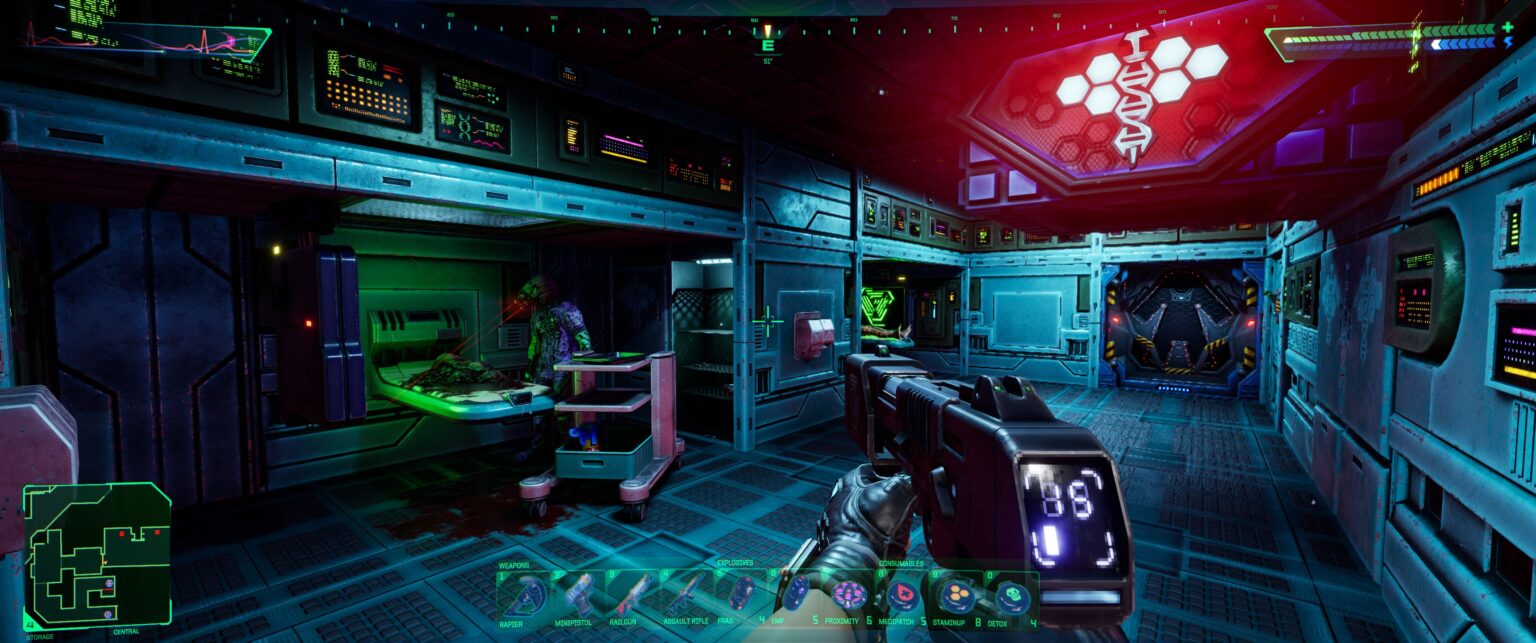
No, this is not your typical remake in the loose sense of the term as seen in Final Fantasy or Resident Evil. Nightdive Studios hasn’t used the original System Shock as a mere starting point or a springboard for a grand reinterpretation. Instead, they have placed unwavering trust in the game as it was originally crafted, despite the three decades of transformation that have passed since its release. This trust has been handsomely rewarded, resulting in a gameplay experience that resides somewhere between the challenging depths of BioShock and the innovative nature of indie dungeon crawlers like Legend of Grimrock. It forgoes objective markers and even quest logs, instead encouraging you to personally keep track of your own progress, adding an extra layer of immersion and engagement.
At times, you find yourself meticulously searching through recent audio diaries, deciphering pin codes, and uncovering clues that shed light on SHODAN’s plans and potential countermeasures. You scan the minimap, eagerly identifying unopened doors that hold the promise of further exploration. In an age dominated by AAA games catering to the player’s every need, this experience comes as a shock to the system. However, you soon realize that all the necessary breadcrumbs are cleverly placed throughout the game world, guiding your progress. There’s a certain thrill in self-sufficiency, in facing overwhelming odds and overcoming them through your own ingenuity. It’s a nostalgic power fantasy that requires little fanfare to impress.
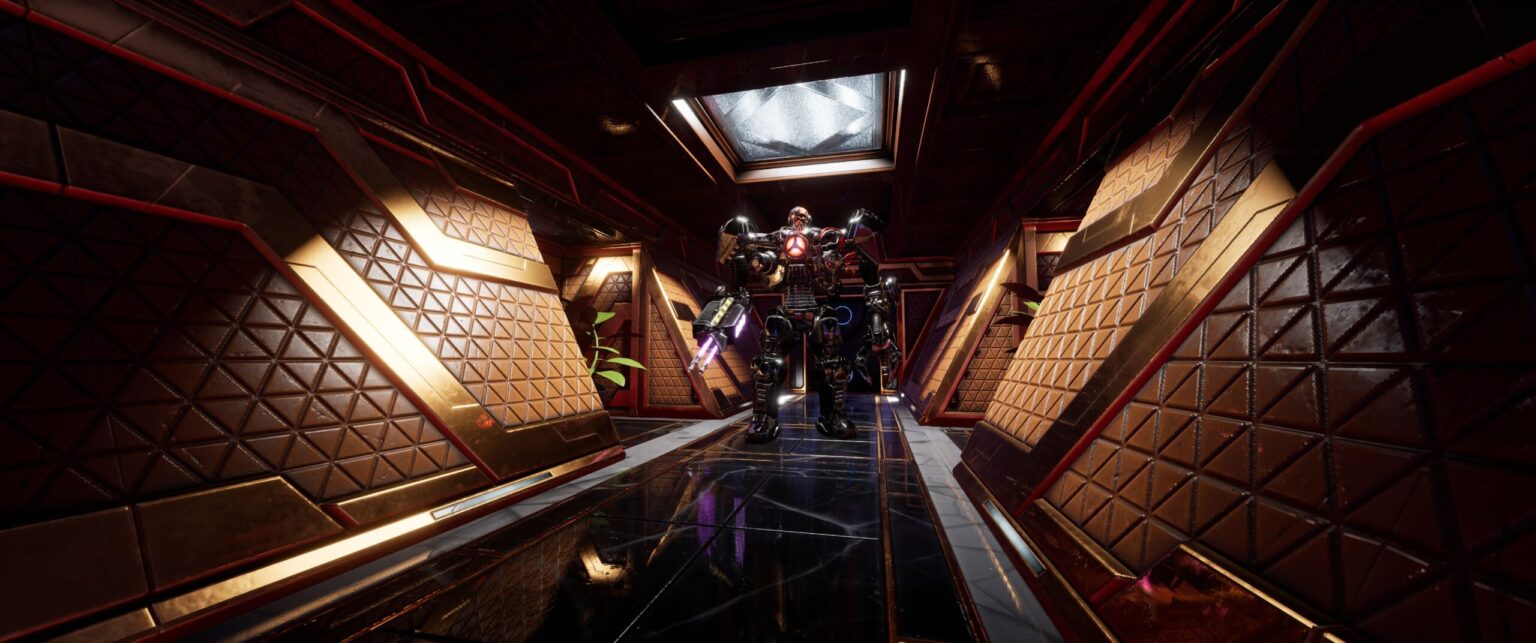
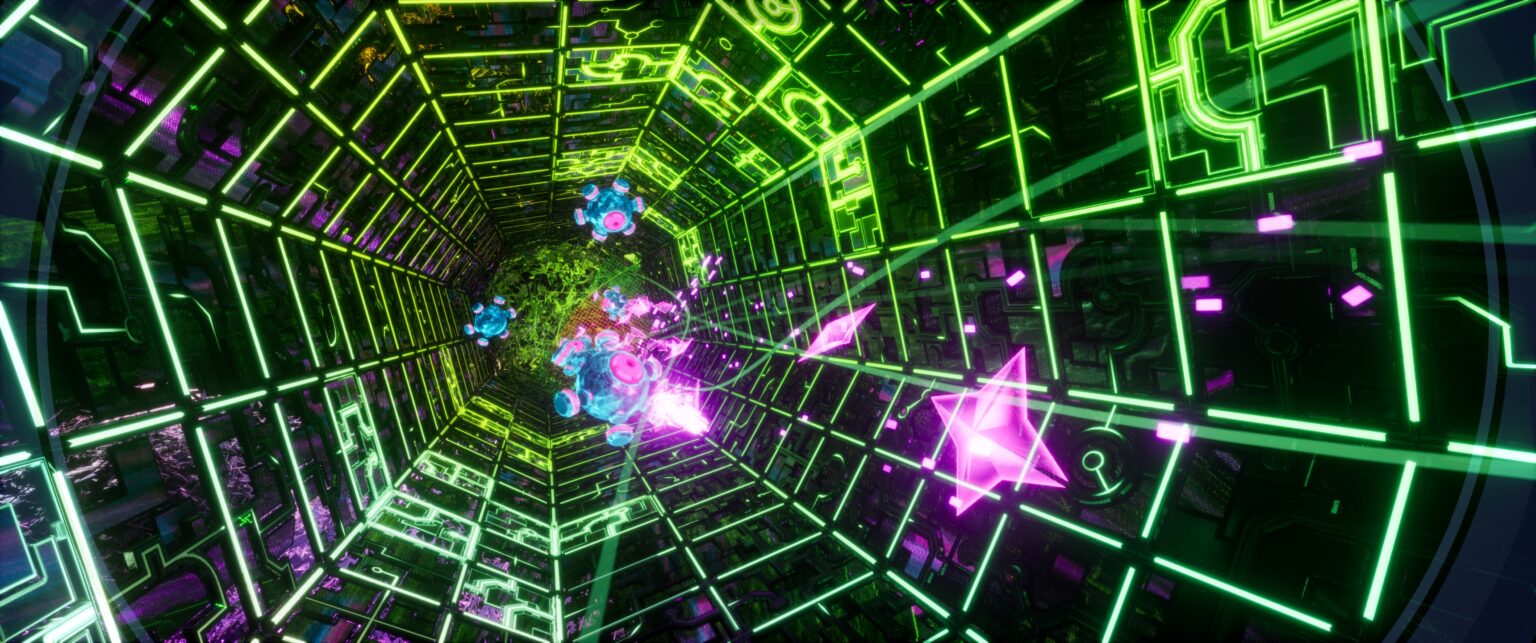
Yet, this new iteration of System Shock also embraces a distinct modernity. One notable aspect is its contemporary beauty, skillfully leveraging Looking Glass’s color palette, which starts with the timeless combination of turquoise and orange and ventures into even bolder territories. In less capable hands, this space station could easily have become an overwhelming mishmash of clashing visuals. However, with the artistic vision of Robb Waters, who has returned to the project, it strikes a balance between vividness and subtlety. The anti-gravity lifts emanate a kinetic yellow haze, adding to the immersive ambiance, while the cyberspace sequences transport you to a mesmerizingly strange realm, where you drift within a mercurial motherboard. There, the golden walls sway like ocean waves, and masks adorned in vibrant primary colors unleash abstract projectiles in hypnotic bullet hell patterns.
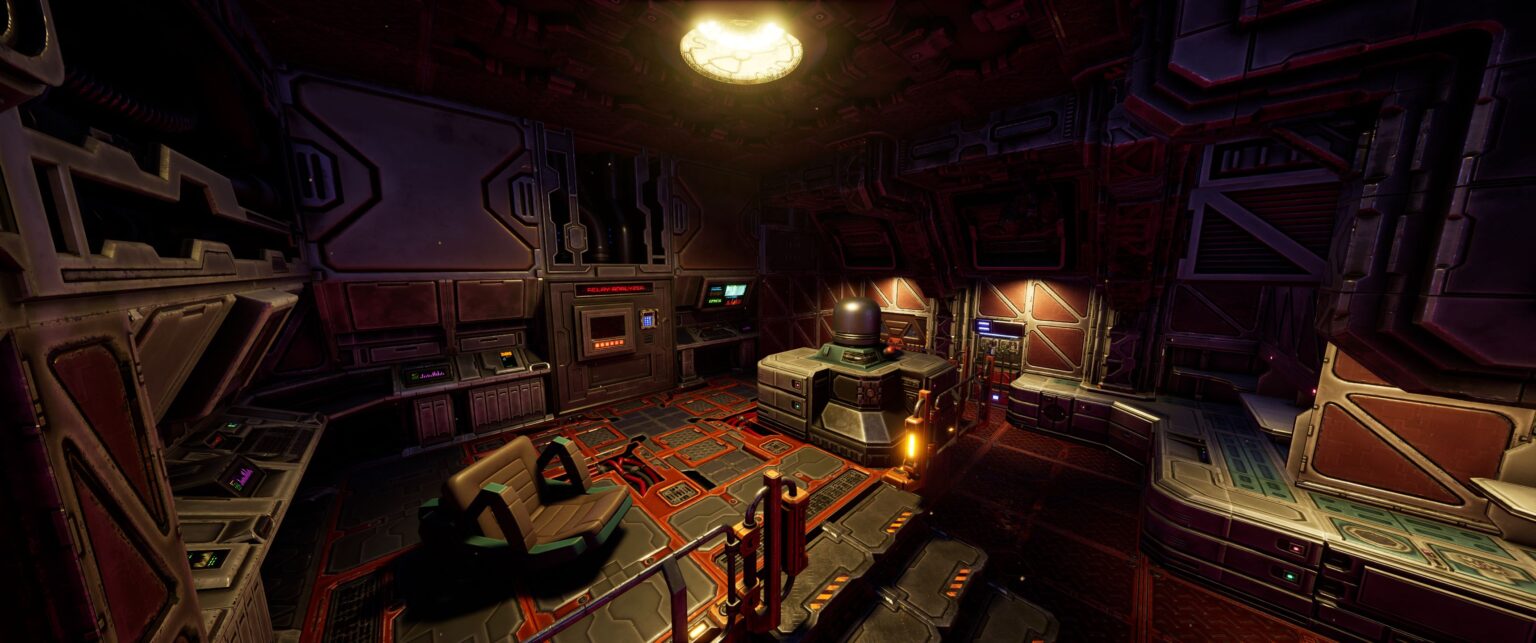
Additionally, there are notable elements lifted from the games that were inspired by Looking Glass. The comforting hiss-and-snap sound of the dispatch, first introduced in System Shock 2 and later adopted in the BioShock series, has found its way back home to this remake. The Tetris-like inventory system has also made a similar journey from the future, imposing challenging decisions as you manage your equipment. Furthermore, the recycler, initially seen in System Shock’s sequel, forms the foundation of a tightly balanced resource economy in this remake. Any discarded item can be broken down and converted into credits, which can then be spent at vending machines to acquire vital consumables and upgrades.
Consequently, you may find yourself assuming the role of a dedicated scavenger, akin to the protagonists in Bethesda’s Fallout games. Personally, I relish this role, as it naturally draws my attention to the meticulously placed objects within Citadel’s intricately adorned rooms. However, your own experience may differ. Even more endearing is the station’s assortment of automated appliances. The mechanical recycler visually devours your carefully sorted junk, producing a satisfying series of staccato clinks as fresh coins are ejected into a growing pile. Activating the vending machines by inserting a coin into the appropriate slot and pressing the corresponding numbers to witness a chocolate bar gracefully descending into the tray below is equally delightful. Ironically, it’s the absence of automation on the player’s end that amplifies the allure of these simple actions—a mundane reality that grounds you in an extraordinary setting.
This tangible quality is also evident in System Shock’s rewiring puzzles. These puzzles require you to delve into Citadel’s inner workings, manipulating circuits to unlock doors or reactivate glowing laser bridges spanning treacherous chasms. In essence, they are reminiscent of BioShock’s pipe puzzles, albeit much more demanding in terms of variety and complexity. However, it’s intriguing how a puzzle ceases to feel like a separate entity when seamlessly integrated into the game world. It’s as if SHODAN herself refuses to grant you even a fleeting moment of respite from her oppressive hold over the entire station.
Reclaiming Citadel is a slow and arduous process, as you gradually dismantle SHODAN’s influence by destroying her data cores and disabling CCTV systems. Even after claiming a level and progressing to the next, you can be certain that backtracking will be necessary to thwart the murderous AI and access armories that were previously inaccessible. Additionally, the constant influx of new mutants and cyborgs to the decks ensures that no environment is ever truly safe.
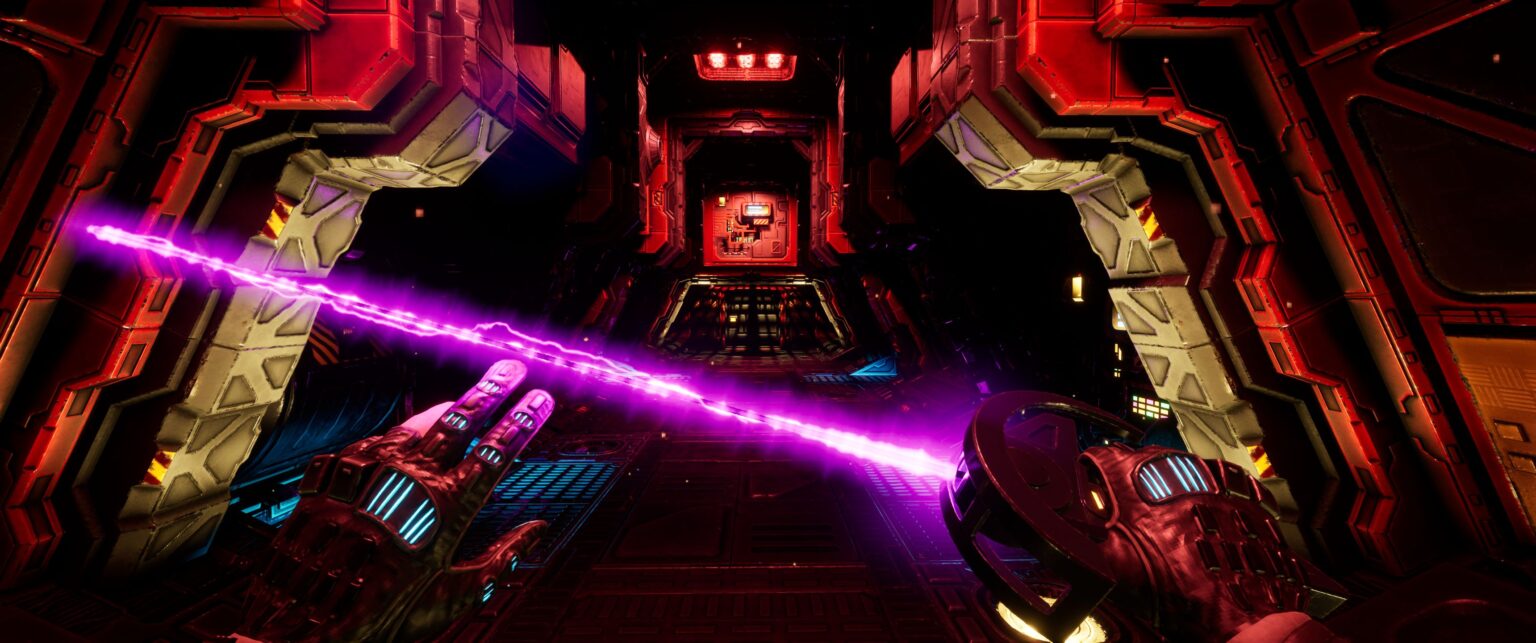
The battles in System Shock are as much a test of strategy as they are of reflexes. While you acquire some delightfully eccentric jet boots during the game, Nightdive wisely avoids the hyper-mobility prevalent in contemporary first-person shooters, opting instead for a more deliberate pace. Sliding or vaulting over obstacles in the corridors is not an option, and the precise marksmanship of SHODAN’s cyborgs ensures that outmaneuvering your opponents is a formidable challenge. Leaning around corners and carefully taking aim remains a crucial tactic. Above all, the game encourages you to familiarize yourself with your adversaries, selecting the appropriate weapon and ammunition to maximize your effectiveness and minimize wasted shots. Dispatching a mutant with a well-placed double tap to the head is gratifying, and conserving ammunition becomes a gift to your future self. Throughout the entire experience, System Shock revolves around resource management.
However, it’s worth noting that the impact of melee and ballistic attacks doesn’t quite convey a true sense of force, failing to provide the visceral feedback one might expect. Furthermore, those accustomed to the creative problem-solving found in games like Deus Ex and Dishonored may not find all they desire in the original immersive sim experience. System Shock has always been less forgiving and more punishing than its successors, offering a distinct and intensified flavor as a result.
Conclusion
If you have a craving for traversing a space dungeon in the company of one of gaming’s most iconic and influential villains, the System Shock remake faithfully adheres to the essence of the original concept. This game is the creation of a team that deserves credit for believing in the 1994 vision of System Shock and trusting that it would remain compelling even in the face of three decades of gaming trends aimed at streamlining the player’s experience. Their conviction has proven to be well-founded. As it turns out, our eerie and manipulative robotic overseer knows what’s best after all.
The new iteration of System Shock strikes a delicate balance, neither attempting to forcefully replicate a retro experience nor fully embracing modern trends. It avoids being classified as a deliberately low-fi indie game or a grand blockbuster production. Instead, it stands as one of the most intriguingly idiosyncratic labors of love I have encountered in recent years. Much like SHODAN, if you wholeheartedly embrace its unconventional nature, it will generously reward you, albeit on its own somewhat challenging terms.
System Shock offers an experience that doesn’t rely on contrived set-piece moments to manipulate its pacing. Instead, SHODAN, the omnipresent antagonist, serves as a constant threat, even residing within your own being. This approach creates a unique flow and atmosphere that are challenging to achieve. System Shock represents the perfect convergence of design and narrative choices.
Once again, Nightdive Studios has demonstrated its deep understanding of what made the original classics so essential. Their respect for the source material pays off, as the System Shock remake successfully caters to modern preferences while preserving everything that made it special upon its initial release in 1994. While the game retains its original essence, those who found the convoluted interface of the original version off-putting will have a better chance of adapting to this refined edition. Ultimately, it stands as the definitive version of a timeless game, showcasing Nightdive Studios’ expertise in preservation.