
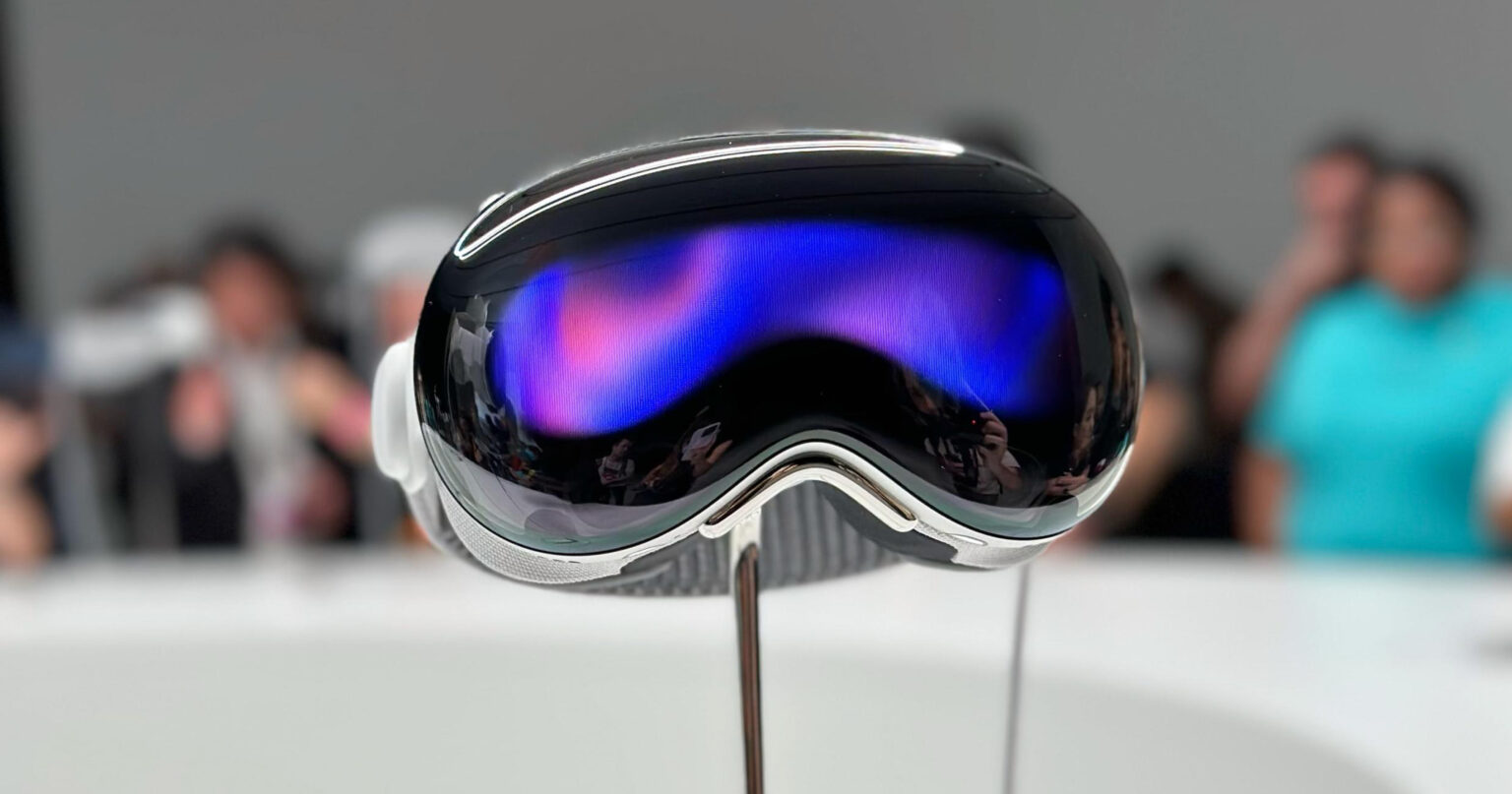
While the price may be prohibitive for many, the Apple Vision Pro has the potential to revolutionize the realms of VR and AR entirely.
The Apple Vision Pro transcends traditional labels of VR or AR headsets, showcasing Apple’s grand ambition. Dubbed the “most advanced personal electronics device ever” by Apple, this spatial computer carries substantial weight, especially considering Apple’s iconic iPhone. Reflecting its caliber, the Vision Pro comes with a hefty price tag of $3,500.
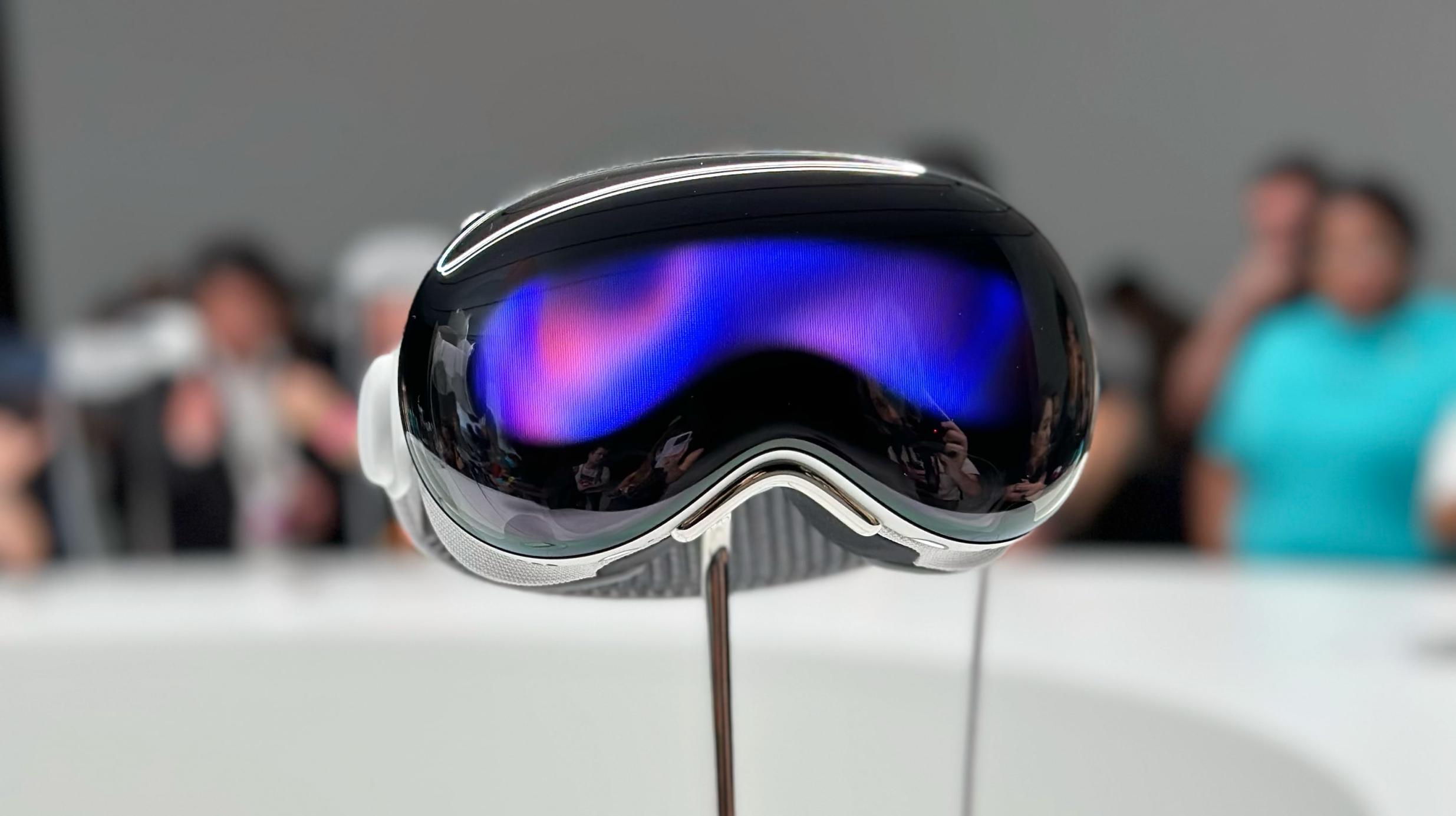
Expected to be released in the early part of the following year, the Vision Pro is undeniably powerful, housing both an M2 chip and a novel R1 chip optimized for real-time processing. It incorporates features like eye tracking, hand control, and voice control, while also prioritizing comfort and a lightweight design. Apple has carefully envisioned numerous applications for the Vision Pro, ranging from elevated productivity when paired with Mac devices to a novel FaceTime experience. Furthermore, it offers immersive video viewing, gaming, as well as photo and video capturing capabilities.
Indeed, the price of the Vision Pro may seem substantial, and rightfully so. However, it appears that the headset has yet to showcase that standout, awe-inspiring experience or killer application that would undeniably justify such a significant investment. Fortunately, Apple and its collaborators have ample time to address this, considering that the headset is not scheduled for shipment until early 2024.
Design
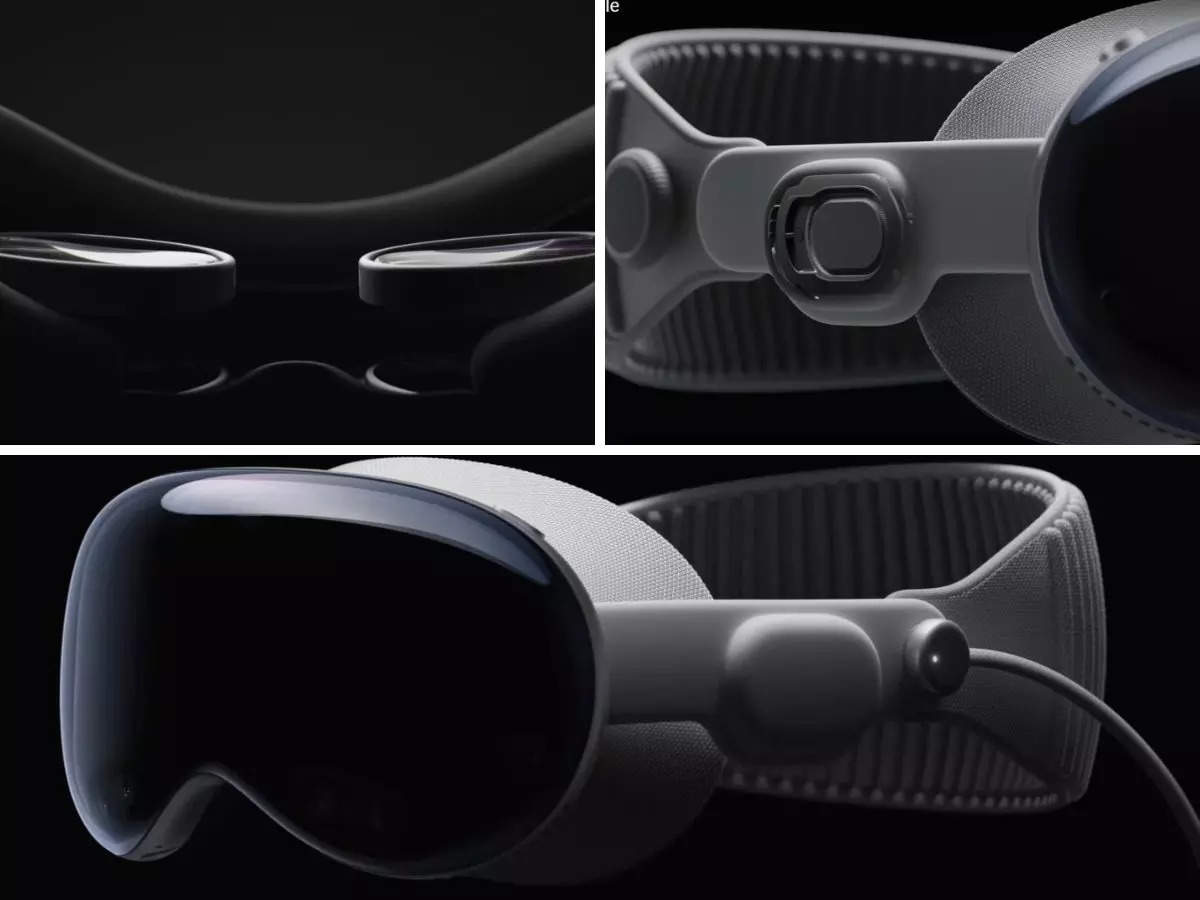
Upon closer inspection, the Apple Vision Pro presents itself as a cutting-edge pair of goggles, leaving a predominantly positive impression. The 3D-formed glass exudes a sleek and refined aesthetic, while the robust aluminum alloy frame enhances its durability. Enhancing the design, the Light Seal positioned between the headset and the user’s face provides a soft and adjustable fit, featuring a range of available sizes.
The Vision Pro’s flexible Head Band contributes to its comfort, equipped with a user-friendly dial for effortless adjustment—a feature I had the opportunity to test. The dial provides a satisfying click when tightened, ensuring a secure fit. Positioned on the top right side of the headset is the Digital Crown, enabling users to fine-tune the level of immersion, while a content capture button is conveniently located on the left side. Pressing the Crown at any time allows users to return to the home screen swiftly.
However, it is crucial to address a couple of concerns. Firstly, the Vision Pro necessitates a tether to an external battery, resulting in a wire extending from the user’s head that needs to be connected to a battery located in their pocket. Additionally, despite its lightweight nature, the headset does not qualify as small. Sleekness comparable to that of Apple Glasses remains a considerable distance away.
Experience a fresh approach to interaction
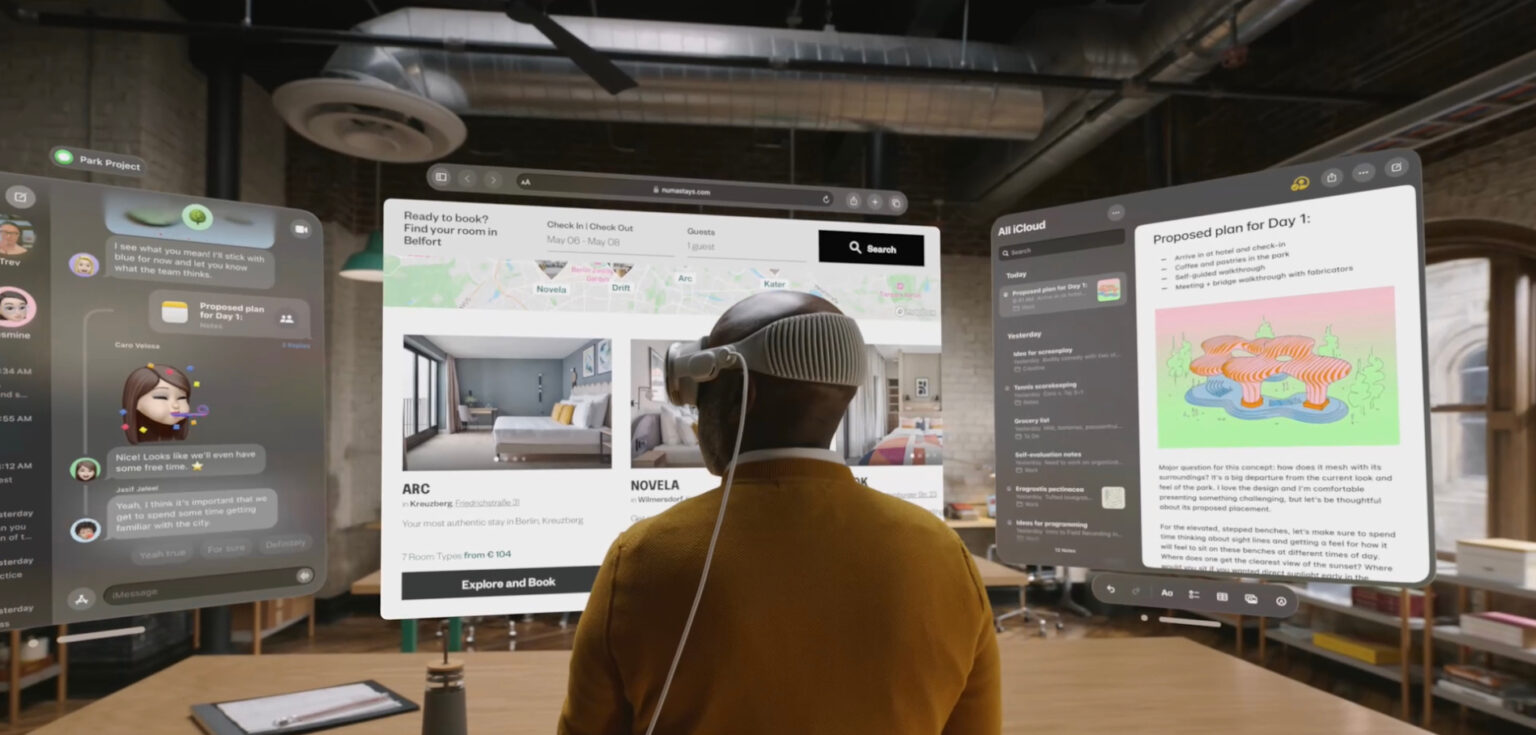
The Vision Pro aims to surpass other headsets like the Meta Quest Pro by eliminating the need for controllers entirely. Its innovative approach begins with a 3D interface and eye-tracking technology.
One notable aspect of the Vision Pro is the absence of physical touch requirements. Users can simply gaze at an app icon and activate it by tapping their fingers together. Even the need to raise one’s hands is eliminated, thanks to downward-facing cameras on the headset that track movements in the user’s lap. Scrolling through content is also intuitive, achieved by tapping fingers together and waving the arm from right to left. This seamless interaction feels like a glimpse into the future.
Managing apps within the virtual space is a breeze with Vision Pro. Users can effortlessly relocate and pin apps wherever desired by focusing their gaze on the bottom bar of the application.
However, there is one unsettling feature worth mentioning: EyeSight. This feature displays the user’s eyes on the Vision Pro’s external display, intending to foster a sense of connection with others. Nevertheless, some may find it disconcerting. Additionally, when a user decides to activate the immersive mode by turning the Digital Crown to its maximum setting, a distinct animation akin to a “do not disturb” indicator is displayed.
What are the potential applications and functionalities of the Vision Pro?
The Vision Pro boasts an extensive range of use cases, beginning with its ability to provide a larger canvas for simultaneously displaying multiple applications. For instance, users can pin a music player to the left, Messages to the right, and have a spacious browser in the middle. In fact, by simply looking at their MacBook while wearing the Vision Pro, users can extend the display seamlessly. An impressive feature is an ability to glance at the address bar and verbally state the name of the desired website, eliminating the need for typing and providing a clever method of interaction.
Apple has also revolutionized the FaceTime experience with the Vision Pro. Utilizing the front cameras, the headset captures users’ digital personas, mirroring their facial expressions and hand movements during video calls. While personal conversations may not benefit from this feature, it proves useful in professional settings, where callers’ virtual avatars appear in front of the user’s view.
During a FaceTime call with a familiar individual, the video quality was comparable to that of a video game. While the face appeared recognizable, the realism of facial movements and teeth left room for improvement. It was fascinating to collaborate within the Freeform app while simultaneously engaging in a FaceTime call, incorporating shared 3D models.
For a cinematic experience, the Vision Pro can recreate a virtual screen up to 100 feet wide, complete with Spatial Audio. Movies and TV shows can be enjoyed in 4K resolution, and the headset also supports 3D movie playback.
At launch, Apple assures that the Vision Pro will be compatible with over 100 Apple Arcade games and game controllers. However, the anticipation lies in witnessing games explicitly designed for the Vision Pro, leveraging augmented reality and the headset’s ability to recognize hand gestures.
Immersive viewing of memorable photos and videos is made possible with the Vision Pro, providing a life-size scale experience. Panorama shots can be viewed as if physically present. The Vision Pro’s 3D camera adds another dimension of interest, enabling users to capture spatial photos and videos.
Furthermore, the Vision Pro facilitates the execution of iPhone and iPad apps via the new vision OS. However, the excitement surrounding spatial computing will largely rely on compelling third-party apps, such as those from Disney and other notable developers. Interactions like watching an NFL game while receiving real-time stats or observing a separate overhead view of the field showcase the device’s potential, as does the ability to interact with a table-based representation of Disney World.
Powerful processor and weak battery
Apple’s Vision Pro stands out as the most advanced VR/AR headset available, primarily due to its formidable M2 chip and dedicated R1 chip responsible for the real-time processing of 12 cameras, five sensors, and six microphones.
Displaying an impressive technological prowess, the Vision Pro’s micro-OLED displays offer a better-than-4K resolution, housing an astounding 23 million pixels within two compact postage-stamp-sized screens. Furthermore, the inclusion of a Spatial Audio System, fueled by audio pods situated on either side of the headset, ensures an immersive and personalized audio experience.
However, users should be aware that the Vision Pro’s battery life is not its strong suit. Relying on an external battery pack, it can only sustain approximately 2 hours of usage before requiring a recharge. Although the battery pack is relatively compact and comparable in size to an iPhone, its presence is noticeable in one’s pocket while moving about.
Conclusion
Advantages
- Elegant and streamlined design
- Customizable immersion through a dial
- Robust M2 and R1 chips for powerful performance
- Exceptionally sharp micro-OLED displays
- Intuitive interface featuring eye tracking and hand gestures
Drawbacks
- External battery pack with limited battery life
- EyeSight feature can be unsettling
- An extremely high price tag
This highly capable headset showcases immense power, with the recognition that it represents the initial version of the product. The potential unleashed by developers has yet to be fully explored, adding to the anticipation surrounding this device.
Particularly notable are the remarkably lifelike video pass-through experience, the intuitive interface devoid of controllers, and the immersive video playback. The added flexibility of adjusting the level of immersion through the digital crown offers users control over the extent of their enclosed experience.
However, certain aspects give rise to reservations. The 3D content capture experience raises concerns about one’s appearance to others, the Digital persona feature falls short of complete believability, and the EyeSight functionality possesses a somewhat disconcerting quality.
Boasting a sleek design, advanced eye, and hand tracking, and crisp micro-OLED displays, the Apple Vision Pro emerges as a highly potent mixed-reality headset. It offers an immersive video viewing experience, seamless multitasking capabilities, a wide range of games, and reimagined FaceTime calls. However, the device’s $3,500 price tag necessitates the presence of truly exceptional applications to justify its cost.